
Dilemmas Quiz
carrot_quizTrivia
0.00.00 Reviews
- Version
- 0.3.2
- Installs
- 100.00K
- Age Rating
- Everyone
Screenshots
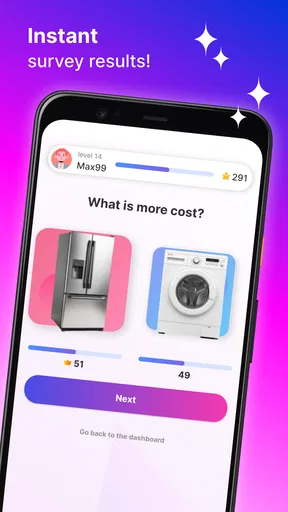
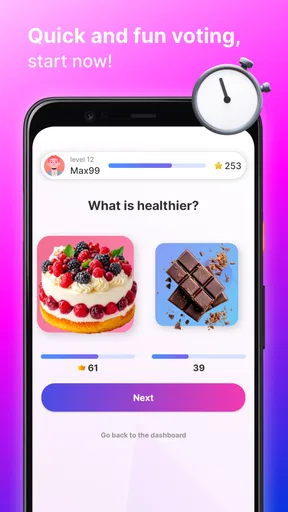
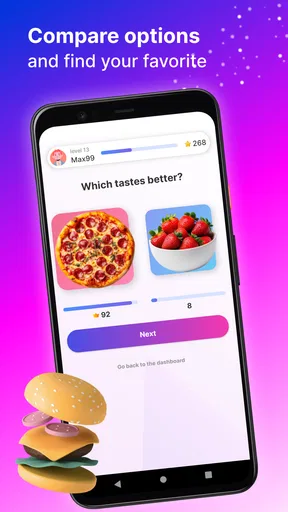
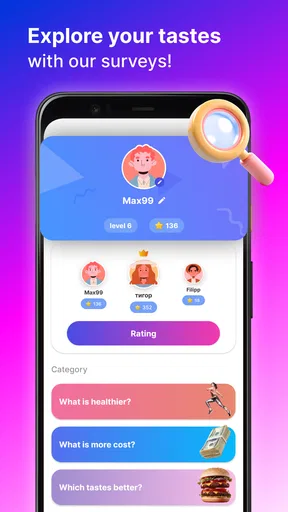
Our Review of Dilemmas Quiz
 Analysis by Appyee
Dilemmas Quiz is the kind of trivia game I open when I want a quick conversation starter rather than a traditional test of facts. Its central idea is simple: make a choice, then see what opinion that choice represents. That gives it a different mood from ordinary quiz apps, where the goal is usually to select the one correct answer. Here, the interest comes from comparing reactions, questioning your own preferences, and discovering how another person might respond.
I found the concept easy to understand almost immediately. The store summary describes it as a way to make a choice and find out an opinion, while the short description presents it as a dilemmas quiz. Those two phrases capture the experience better than a long feature list would. This is a lightweight trivia game built around decisions, not a study tool disguised as entertainment.
The game is free, and it is published by carrot_quiz. It belongs to the Everyone age category, which makes its general presentation approachable for a broad audience. It was released on December 25, 2023, and the current version is 0.3.2. On Android, it requires version 6.0 or later, so it should fit many older devices as well as newer phones. The game has passed 100K installs, enough to suggest that the format has found an audience without making the experience feel like a huge social platform.
How the choice-based format works in everyday use
The first thing I noticed is that the appeal depends less on technical complexity and more on the quality of the dilemma in front of you. A good question makes me pause, imagine both situations, and commit to one option. A weak question can feel obvious or too vague. That makes each prompt important: the game lives or dies by whether the choices create genuine tension.
I would use it in short sessions. It fits a spare moment while waiting for a coffee, a quick break between tasks, or a relaxed evening when friends are sitting together and need something to discuss. It does not demand the concentration of a knowledge-heavy quiz, and that is a strength when I want entertainment without preparation.
It also works better as a shared activity than as a solitary score chase. If I play alone, the reward is seeing how I react to a difficult choice. With another person, the answer becomes the beginning of a conversation: why did you choose that option, would you change your mind, and does the result match what you expected? That social layer gives the simple format more life.
A realistic use case is a small group waiting for dinner. One person can read the dilemma aloud, everyone chooses, and the discussion continues even after the screen has moved on. Unlike a standard trivia round, nobody needs to know obscure facts to participate. The person who normally avoids quiz games can still have an opinion, while the person who enjoys arguing a point has plenty to say.
My practical advice is to treat each decision as a prompt rather than a judgment. The game may show an opinion connected to your choice, but that does not make one answer morally or intellectually superior. If you approach it as a way to compare perspectives, the experience stays playful. If you expect an authoritative personality assessment, you may find the format too light.
Why the lack of a single correct answer matters
Most trivia games create pressure through right and wrong answers. That can be satisfying because improvement is easy to measure, but it can also make a session feel like homework. Dilemmas Quiz shifts the pressure inward. I am not trying to remember a capital city or identify a historical date; I am deciding what I would actually do.
That change makes the game accessible to people with very different knowledge levels. A player does not need specialist interests, fast recall, or a large vocabulary to take part. It also means the challenge is less predictable. A question that seems easy at first can become uncomfortable once I imagine the consequences of each option.
The trade-off is that progress may feel less concrete than in conventional trivia. There is no obvious learning path in the basic premise, and a choice does not necessarily demonstrate that I have improved. If you want a game that teaches facts, builds a measurable streak, or explains every answer, a conventional quiz app will probably serve you better.
I also think the format benefits from playing with the right audience. Friends who enjoy hypothetical questions can turn a short session into a long conversation. Someone who dislikes personal or opinion-based prompts may find the same questions intrusive, repetitive, or simply uninteresting. The game is most successful when everyone understands that the answers are for discussion, not for labeling one another.
Spending, access, and the practical purchase question
The important starting point is straightforward: the game is free to download. That makes it easy to try without committing money first, which suits a casual title built around quick decisions. I could recommend installing it for a group activity without asking everyone to budget for another game.
At the same time, I would not confuse free access with a promise about every possible part of the experience. The available product details establish the free price, but they do not give me a basis for describing optional purchases, subscriptions, advertising behavior, or payment restrictions. I would therefore approach the download as a no-cost trial and check the on-device presentation before assuming anything about spending.
This matters because a free game can still create friction through interruptions or locked material, but I do not want to invent a specific system that is not confirmed here. My spending verdict is consequently simple: there is no stated purchase price for getting the game, so it is low-risk to test; before involving children or using it regularly, I would personally inspect the screen flow and any prompts that appear during play.
For a parent, the Everyone rating is reassuring as a broad age classification, but it should not replace personal judgment. Dilemmas can touch on sensitive subjects even when the overall product is intended for everyone. I would play a few rounds first, especially if a child is going to use it independently, and decide whether the tone suits that particular child.
Progress, pressure, and the limits of replay value
The strongest form of progress here is personal rather than numerical. I may become quicker at making choices, more aware of my own priorities, or better at explaining why I selected one side. That is meaningful in a social setting, but it is not the same as climbing a knowledge ladder.
This distinction affects replay value. A fact quiz can bring me back because I want to improve a score or fill gaps in what I know. A dilemma game brings me back when I want fresh prompts, a different group, or another chance to compare answers. If the questions begin to feel familiar, the motivation may drop faster than it would in a game with a large progression system.
There is also a small psychological pressure in being asked to choose. I sometimes hesitate because both options have drawbacks, and that hesitation is part of the fun. However, a player looking for a relaxing game with no personal reflection may prefer a word puzzle or a conventional multiple-choice quiz. The pressure is gentle, but it is still the central mechanic.
I recommend playing in short bursts instead of forcing a long session. That keeps the dilemmas feeling fresh and gives each question room for discussion. In a group, rotating the person who reads or starts the conversation can prevent one player from controlling the pace. In solo play, writing down a reason for an unusual answer can make the session more engaging than tapping quickly through every choice.
Is the experience fair in a competitive sense?
Dilemmas Quiz is not naturally competitive in the same way as a ranked trivia game. Since the core activity concerns opinions, fairness is less about who knows the most and more about whether everyone gets an equal chance to respond. That is a positive feature for mixed groups: a person with limited trivia knowledge is not automatically placed at a disadvantage.
It also reduces the value of memorization or outside research. Looking up facts would not necessarily help with a personal dilemma, so the game encourages spontaneous answers instead of preparation. In that sense, it can feel fairer than a knowledge contest when players have very different backgrounds.
There is a different kind of imbalance, though. People interpret the same wording differently, and some players are naturally more comfortable defending an opinion. A confident speaker can dominate the discussion even when the game itself treats the choices equally. I would solve that socially by giving everyone time to answer before anyone explains their reasoning.
If you are searching for an app to settle an argument objectively, this is not the right tool. A dilemma can reveal a preference, but it cannot prove that one person is correct. For a serious competition, I would choose a trivia game with transparent scoring and clearly verifiable answers. For a friendly debate where the point is to compare viewpoints, this format is much better suited.
What I would still check before making it a regular game
The current version is 0.3.2, which tells me the product is still presented through a relatively early version number. I would not treat that as a criticism by itself, but it does encourage a little patience. The experience may evolve, and small interface or content changes can matter greatly in a game that relies on the rhythm of one prompt after another.
I would also pay attention to how varied the dilemmas feel over time. Variety is especially important here because the mechanic is intentionally simple. A game with several complex systems can remain interesting through strategy, upgrades, or exploration. This one needs its choices and conversations to carry most of the weight.
Another question I would consider is whether the game suits solo use or mainly functions as a conversation aid. It can be played as a personal reflection exercise, but I found the premise more valuable when another person was present. Someone looking for a deep single-player challenge should keep expectations modest. Someone looking for an easy way to start a discussion may find exactly what they need.
Device compatibility is relatively approachable because the minimum Android requirement is 6.0. That is useful if you are installing it on an older spare phone, although compatibility alone does not tell me how the game will feel on every screen size or device. I would still test it on the phone intended for group use rather than assuming the same comfort everywhere.
Who should download it, and who should skip it?
I would recommend it to friends who enjoy “what would you do?” conversations, families looking for a simple shared activity, and casual players who want a trivia-shaped game without demanding factual knowledge. It is also a sensible option for mixed groups, because the central challenge does not depend on age-specific expertise or a competitive memory advantage.
I would be more cautious about recommending it to someone who wants detailed explanations, educational content, strategic depth, or a strong long-term progression system. A player who measures enjoyment through high scores may also find the opinion-based structure less satisfying. In those cases, a traditional trivia game, a puzzle title, or a personality-focused experience could be a better match.
The game is particularly useful when the goal is to fill a social gap rather than occupy a player for hours. I can imagine using it during a family visit, a casual gathering, or a quiet conversation with someone I do not know well. The questions give people something specific to react to, which is often easier than asking an open-ended question from nothing.
My best tip is to avoid rushing past the answer. Choose first, then ask the other player what detail influenced the decision. That extra step turns a basic tap-based activity into a more memorable exchange. A second tip is to stop when the conversation becomes repetitive; because the game is lightweight, ending on an interesting dilemma is better than exhausting the format.
My trust verdict after using the concept as intended
What I like most about Dilemmas Quiz is its clear identity. It does not need to pretend to be a complete educational platform or a serious competitive arena. It offers a focused way to make choices and compare opinions, and that can be surprisingly effective when the people playing are willing to talk.
The free price and Everyone rating make it approachable, while the Android 6.0 requirement keeps the technical entry point broad. The developer, carrot_quiz, has built around a premise that is easy to explain to a friend: open it, face a dilemma, choose, and discuss what the choice says about your perspective.
My reservations are equally clear. The experience depends heavily on prompt quality, replay value may be limited for players who need structured progression, and the game should not be mistaken for an objective personality test or a fair competitive ranking system. I would also inspect the live experience before making assumptions about interruptions or spending beyond the stated free price.
Overall, I see it as a useful social trivia game rather than a deep solo challenge. If you want quick decisions that lead to real conversation, it is worth trying; if you want scores, lessons, or measurable mastery, choose a different kind of quiz. That honest distinction is what makes the game easy to recommend to the right person without overselling what it is.
Verdict
Strengths of Dilemmas Quiz
- Quick, casual rounds that are easy to play during short breaks.
- Wide range of everyday scenarios keeps the questions relatable.
- Simple controls make the quiz accessible to most players.
- Useful for starting conversations with friends or family.
- Lightweight gameplay does not require advanced gaming skills.
Limitations of Dilemmas Quiz
- Some dilemmas may feel repetitive after extended play sessions.
- Answers can seem subjective, with no universally correct choice.
- The experience may offer limited depth for serious quiz fans.
- Certain questions may not suit younger players or sensitive users.
- Progression can feel less rewarding without stronger long-term goals.
Similar Picks in This Category
View All
Millionaire 2026 Quiz & Trivia
Quiz & Trivia Games by Submarine Apps4.5

Brain Test 2: Tricky Stories
Unico Studio4.7

Trivia Crack: Brain Quiz Games
etermax4.4

QuizzLand. Quiz & Trivia game
Quiz & Trivia Games by Mno Go Apps4.8

Brain Test: Tricky Puzzles
Unico Studio4.7

Logo Quiz
bubble quiz games4.5
Frequently Asked Questions
What is Dilemmas Quiz and how does it work?
Dilemmas Quiz is a choice-based quiz game built around challenging “would you rather” situations and moral or everyday dilemmas. After reading each scenario, you select the option that best matches your opinion. The app then lets you compare your answer with other players or see how popular each choice is, making it suitable for casual play, discussions, and learning more about your friends’ personalities.
Is Dilemmas Quiz free to download and play?
Dilemmas Quiz can generally be downloaded for free, although the exact availability of free content may depend on the version and platform. Some editions may include advertising, optional purchases, or premium question packs. Before installing, it is worth checking the app-store listing for current pricing, in-app purchase details, and whether certain features require payment or an account.
Can I play Dilemmas Quiz with friends?
Yes, the game is mainly designed to make dilemma questions more entertaining when shared with other people. You can discuss your answers, challenge friends to choose between difficult options, and compare different opinions. Depending on the version installed, social features may include multiplayer sessions, sharing results, or online comparisons, so available options can vary between Android and iOS.
Does Dilemmas Quiz require an internet connection?
An internet connection may be needed for downloading the app, receiving updates, displaying advertisements, synchronizing progress, or using online and social features. Some question content may remain available offline after installation, but this is not guaranteed for every version. If you plan to play while traveling or without mobile data, test the app beforehand and review its current offline capabilities.
Is Dilemmas Quiz appropriate for children and all audiences?
The game’s suitability depends on the question packs and the age rating shown in the relevant app store. Many dilemmas are lighthearted, but some may involve relationships, embarrassing situations, mature themes, or controversial choices. Parents should review the store rating and, if possible, sample the content before allowing younger players to use it. Avoid sharing personal information when using social features.
Play our best games!


